
The Next Chapter for That Empty Lot Might Start With a Phone Call.
What housing developers in Fulton County, New York, may not know about a valuable local development resource.

You can almost see it already.
The building where there’s an empty lot today. The landscaping. The lights coming on in the windows. The first residents carrying boxes through the front door.
Maybe it’s an apartment community. Maybe it’s senior housing. Maybe it’s a property that’s been sitting quietly for years, waiting for someone with the imagination and experience to see what it could become.
That’s one of the remarkable things about real estate development.
A developer can look at an empty piece of land and see a future that nobody else can see yet.
Of course, between that first vision and the day someone gets the keys, there’s quite a bit of work to do.
The architects have drawings. The engineers have calculations. The lenders have questions. The contractors have schedules. And somewhere in the middle of it all is a spreadsheet with enough tabs to make anyone appreciate a good cup of coffee.
That’s development.
It takes vision, patience, experience, and the right people around the table.
But here’s a question worth asking:
Is everyone who could help your project move forward actually at that table?
There's Someone You Might Not Have Thought to Call

If you’re considering a housing development in Fulton County, New York, there’s a local organization worth getting to know.
The Fulton County Industrial Development Agency.
Yes, Industrial Development Agency.
We know. The name doesn’t exactly scream apartments, townhomes, or senior living communities.
But as it turns out, there’s more to the story.
While FCIDA is well known for supporting industrial and commercial development, its economic development mission also includes opportunities involving housing.
And for developers who are putting together the financial picture of a proposed project, that could be an important conversation.
Because FCIDA may be able to provide financial assistance to qualifying housing developments through programs that some real estate professionals don’t realize are available.
No magic wand. No guaranteed approvals.
Just a potentially valuable resource that deserves a place in the discussion.
Sometimes the Most Valuable Addition to a Project Isn't Another Building
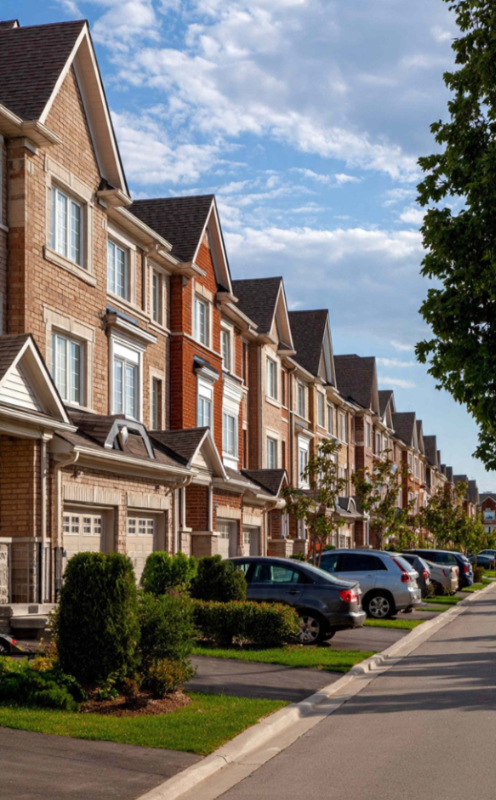
Let’s imagine a developer who’s considering a multifamily housing project in Fulton County.
The location makes sense. The concept is taking shape. There’s a team working through construction costs, financing, approvals, and long-term operating expenses.
Everyone is doing what experienced development teams do: asking questions, evaluating options, and making sure the project can stand on its own.
Then someone mentions the IDA.
It’s not necessarily the first organization that comes to mind when you’re planning housing.
But a conversation reveals that FCIDA has a framework for considering financial assistance for eligible housing projects.
Suddenly, there’s another resource to evaluate.
Not a replacement for good planning. Not a shortcut around the development process.
Another piece of information that belongs in an informed investment decision.
And sometimes, knowing which questions to ask—and who to ask them—is an advantage all by itself.
So, What Could FCIDA Actually Do?

Let’s get practical.
Under its published Uniform Tax Exemption Policy, FCIDA may consider certain forms of financial assistance for qualifying housing developments.
These include:
Payment in Lieu of Taxes (PILOT) agreements. A PILOT establishes an agreed payment arrangement involving property taxes for an approved project. FCIDA’s policy provides for housing PILOT agreements to be developed on a case-by-case basis, with a maximum term of 30 years.
Sales tax exemptions. Eligible projects may qualify for exemptions on certain purchases associated with approved project development, subject to applicable requirements and agency authorization.
Mortgage recording tax exemptions. Qualifying projects may also be considered for mortgage recording tax assistance, which can be relevant when evaluating project financing costs.
These are not automatic benefits, and every project has its own circumstances.
FCIDA evaluates proposed projects under its policies and applicable law, including their potential economic and community benefits. Housing projects are subject to specific findings concerning employment opportunities and the prevention of economic deterioration in Fulton County.
If you’d like to see the details, you can review FCIDA’s Uniform Tax Exemption Policy.
The broader legal framework governing industrial development agency tax exemptions is addressed in New York State General Municipal Law § 874.
You don’t need to become an expert in either document before making a phone call.
That’s part of the reason to have the conversation.
Housing Development Is About More Than Housing

Think about what happens when a well-planned housing project becomes part of a community.
People move in. They shop locally. They visit nearby businesses. They become neighbors, customers, volunteers, and members of the community.
A housing development can also create opportunities for construction professionals, suppliers, service providers, and other local businesses.
And having a range of housing options can matter to employers trying to attract and retain workers.
Of course, every development is different. The potential benefits depend on the project, its location, and the needs of the community.
But that broader picture is one reason housing belongs in economic development conversations.
It’s also why FCIDA’s mission reaches beyond the industrial projects people traditionally associate with its name.
A successful development isn’t just about what gets built.
It’s about what becomes possible afterward.
What If You're Still in the Early Planning Stages?

Even better. That’s a perfectly reasonable time to start asking questions.
Maybe you own property and are considering what to do with it.
Maybe you’re evaluating several potential development sites.
Maybe you’re a commercial real estate broker working with a client who sees an opportunity in Fulton County.
Or perhaps you’re a developer with experience elsewhere in New York State who’s beginning to explore the local market.
You don’t need to arrive with a finished proposal and every detail resolved simply to ask whether FCIDA might be relevant to your plans.
A useful initial conversation could begin with a few straightforward questions:
- What kind of housing development are you considering?
- Where in Fulton County would the project be located?
- How far along are you in the planning process?
- What are the project’s anticipated investment and financing needs?
- Would it make sense to explore whether any FCIDA programs could apply?
Those questions help establish whether there’s a reason to continue the discussion.
And if the project isn’t a fit for FCIDA assistance, it’s better to understand that early, too.
Good development decisions depend on good information.
Frequently Asked Questions About Housing Development and FCIDA
Frequently Asked Questions About Business Expansion
Yes! The name might surprise you, but the Fulton County Industrial Development Agency’s work isn’t limited to factories and industrial parks.
Under its published policies, FCIDA can consider financial assistance for qualifying housing developments, including multifamily apartments, senior housing, and other eligible residential projects.
Every project is evaluated individually, but if you’re planning housing in Fulton County, it’s worth finding out whether FCIDA should be part of the conversation.
Depending on the project and its eligibility, FCIDA may be able to provide assistance through Payment in Lieu of Taxes (PILOT) agreements, sales tax exemptions, and mortgage recording tax exemptions.
These programs can be relevant when developers are evaluating construction costs, financing, and long-term project economics.
Assistance isn’t automatic, and the details depend on the proposed project, applicable laws, and FCIDA approval.
You can learn more in FCIDA’s Uniform Tax Exemption Policy.
Not necessarily. A project’s size is only one part of the picture.
FCIDA considers proposed developments in light of its policies, eligibility requirements, and potential economic and community benefits. There may be circumstances where a project doesn’t qualify or where the available assistance isn’t a practical fit.
The best starting point isn’t assuming your project is too big, too small, or too different.
It’s asking.
You don’t need to wait until every detail is settled to start a preliminary conversation.
In fact, learning about potential development resources while you’re evaluating a property or putting together a project plan can help you make more informed decisions.
FCIDA can explain its process and help you understand what information would be needed to evaluate a potential application.
An early conversation doesn’t guarantee eligibility or approval, but it may help you decide what to explore next.
Absolutely. Developers often rely on brokers, attorneys, financial advisors, and other professionals to help identify opportunities and navigate complex decisions.
If you’re working with a client considering a housing development in Fulton County, you’re welcome to make an initial inquiry.
You don’t need to have every answer before calling. Start with what you know about the proposed project, and FCIDA can help determine whether a more detailed discussion makes sense.
Have a project or client in mind? Call FCIDA at 518-736-5660. Sometimes the most useful next step is simply knowing who to talk to.
The Next Chapter Is Yours to Write
Somewhere in Fulton County, there’s a property with a future that hasn’t been built yet.
Maybe someone drives past it every morning without giving it a second thought.
Maybe a developer has already walked the site, studied the surrounding neighborhood, and started imagining what could go there.
Maybe the first sketches are sitting on a desk right now.
Every completed development has a story. A moment when somebody saw an opportunity, started asking questions, and brought the right people together to explore it.
If you’re considering a housing development in Fulton County, we’d welcome the opportunity to hear what you have in mind.
We can’t promise that every project will qualify for assistance. But we can talk through your plans, explain FCIDA’s role, and help you understand whether there’s an opportunity worth exploring.
And that conversation can start with a simple phone call.
Have a Housing Development in Mind? Let's Talk.
Call Scott Henze, Executive Director of the Fulton County Industrial Development Agency, at 518-736-5660.
Tell us a little about the property, the project you’re considering, and what you’re hoping to build.
You bring the vision.
Let’s find out whether FCIDA can help you explore what’s possible.